The Palace Termites and the 100-Billion Peso Lie: How a ‘Genius Move’ and Providential Timing Exposed a Plot to Destabilize the Presidency!
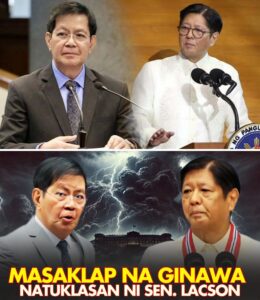
In the high-stakes world of Philippine politics, the line between truth and fabrication is often blurred by sensational headlines and social media frenzies. Recently, the nation was gripped by a scandalous allegation that seemed destined to shake the very foundations of the current administration: a claim involving a staggering 100 billion pesos in budget insertions and a direct accusation against President Bongbong Marcos (PBBM). The narrative was perfect for generating outrage—a leader allegedly ordering massive kickbacks. However, as the dust settles and the facts undergo rigorous scrutiny, a different, far more sinister reality has emerged. It is a story not of presidential corruption, but of betrayal from within—a tale of “palace termites” and a plot dismantled by cold, hard logic.
The Armored Van in the Basement
To understand the gravity of the situation, one must look at the vivid details that have surfaced during recent investigations. The imagery is cinematic: an armored van parked discreetly in the basement of the Diamond Hotel in Makati. According to testimonies, this vehicle wasn’t just sitting idle; it was a vessel for the transport of immense wealth. Witnesses describe deliveries ranging from 800 million to a staggering 2 billion pesos in cash per trip. It sits there, silent and heavy, like a ticking time bomb waiting to detonate a political crisis.
For weeks, the public was led to believe that these movements of funds were directly tied to the President. The narrative pushed by critics, and allegedly fueled by statements from figures like Zaldy Co, was that these funds were commissions for the Chief Executive. It was a simple, infuriating story that played on the frustrations of the ordinary Filipino weary of systemic corruption. But as seasoned investigators know, the simplest story is often a cover for a more complex deception.
The “Genius Move” of Senator Ping Lacson
Enter Senator Ping Lacson, a man known for his meticulous attention to detail and his refusal to be swayed by emotional outbursts. While social media was ablaze with anti-administration sentiment, Lacson was quietly looking at the documents. He wasn’t acting as a defense attorney for the President; he was acting as an investigator looking for the truth. What he found has been described as a “genius move”—not because it was a political maneuver, but because it was an exercise in undeniable logic.
Lacson pointed out a glaring inconsistency that shattered the accuser’s credibility. If the President had indeed ordered the insertion of these 100 billion pesos worth of projects for his own gain, why did official records show him vetoing, delaying, or holding back many of these specific items? It is a question that defies the logic of corruption. A mastermind does not sabotage his own scheme. By highlighting this fact, Lacson didn’t just defend the President; he exposed the absurdity of the accusation.
The Rise of the “Palace Termites”
If the President wasn’t the one orchestrating these deals, then who was? This is where the investigation took a dark turn, revealing the existence of what commentators are now calling “anay sa palasyo” or termites in the Palace. These are individuals who burrow deep into the corridors of power, using their proximity to authority to facilitate their own illicit trades.
Testimonies cited by Lacson, particularly those stemming from former DPWH Undersecretary Roberto Bernardo, paint a picture of a “Grand Misrepresentation.” The scheme relied on the age-old tactic of name-dropping. Figures such as Undersecretary Adrian Bersamin and Usec. Trigve Olivar were named in reports as the individuals allegedly orchestrating these moves. The modus operandi was deceptively effective: convince contractors and lawmakers that the orders came “straight from the top.”
When a high-ranking official, dressed in a Barong and speaking with the confidence of someone who walks the halls of Malacañang, claims to carry a message from the President, few dare to question it. This power vibe creates the perfect condition for fraud. They used the President’s name as a golden key to unlock billions, all while the man himself remained unaware that his reputation was being sold to the highest bidder.
The Bernardo Revelation
The narrative took another hit with the emergence of details from Roberto Bernardo. While Zaldy Co allegedly claimed to have delivered 25 billion pesos in commissions to the President, Bernardo’s account suggests a completely different flow of money. Bernardo admitted to handling billions in projects and personally overseeing cash deliveries—not to the Palace, but to the specific undersecretaries mentioned.
The discrepancy is massive. You have one man claiming he delivered money to the President, and another admitting he delivered the cash to the “termites.” Both cannot be true. Furthermore, the timeline provided by the accusers began to crumble under scrutiny. The dates of the alleged cash deliveries (early 2024) did not align with the budget cycles being discussed (the 2025 General Appropriations Act). It was a logistical impossibility—how can one demand a kickback for a budget that hasn’t even been approved or released?
Divine Intervention or Providential Timing?
Observers have noted that the unraveling of this plot feels almost providential. The timing of the revelations prevented what could have been a catastrophic destabilization of the government. Had these accusations gone unchallenged, they would have hardened into “facts” in the court of public opinion.
The video commentary suggests that “God saved the President,” not through a miraculous flash of light, but through the mundane errors of the conspirators. They were too confident, their script too perfect, and their greed too messy. The mismatch in dates, the conflicting testimonies, and the President’s own track record of vetoing questionable projects created a web of evidence that trapped the real culprits instead of their intended target.
The Danger of Misrepresentation
This scandal serves as a stark warning about the fragility of political reputations. As Lacson emphasized, “You cannot just fool around and misrepresent the President.” The damage done by these “termites” goes beyond financial loss; it erodes the public’s trust in institutions. It shows that the greatest threat to a leader often comes not from the opposition, but from those standing right behind him.
The “termite” analogy is apt. These actors work quietly, unseen, causing structural damage until the house is at risk of collapsing. In this case, the house was the Presidency, and the collapse was narrowly averted by the keen eyes of an investigator and the clumsiness of the plotters.
Moving Forward: A Call for Vigilance
As the smoke clears, the public is left with a clearer picture of the political landscape. The sensational claim of a President looting the treasury has been replaced by the more grounded, yet equally disturbing, reality of internal betrayal. The challenge now lies in accountability. Identifying the termites is only the first step; removing them is the next necessary action to preserve the integrity of the government.
This saga serves as a reminder to the Filipino people to look beyond the headlines. In an era where misinformation can travel faster than the truth, critical thinking is our best defense. We must be wary of simple narratives that confirm our biases and instead look for the “genius moves”—the facts, the logic, and the inconsistencies that reveal the true story hiding in the shadows of the armored vans and hotel basements.
The plot to destabilize the administration may have failed this time, but the existence of such bold schemes indicates that the political waters remain treacherous. It is a wake-up call for the administration to sweep its own house and for the public to remain vigilant guardians of the truth.
